Golf Launch Monitor vs Hitting Net: Which Setup?
Launch monitor vs hitting net for home golf practice: cost, space, data, and what each setup gives you. See which to buy first and how to combine them affordably.
A hitting net is the cheapest, simplest way to hit golf balls at home: buy it, set it up in 90 seconds, and start swinging with no electronics. A launch monitor costs more but gives you real shot data and, paired with software and a screen, turns your space into a full simulator where you play virtual courses. The honest answer for most golfers is that these are not rivals so much as stages. Start with a net for swing work, then add a budget monitor like the Garmin Approach R10 when you want feedback and on-screen play. Here is how to decide and how to combine them affordably.
Pair a Budget Monitor With a Simple Net
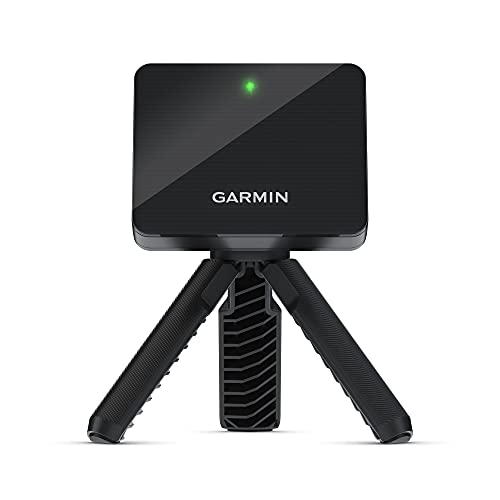
Garmin Approach R10 Portable Launch Monitor
Budget radar monitor that tracks ball speed, club head speed, spin, and launch, and drives sim software for virtual rounds at home or on the range.

GoSports 10 ft x 7 ft Golf Practice Hitting Net
Large bow-frame net with a reinforced center pocket and 90-second setup, a sturdy, no-tech way to hit full shots safely indoors or out.
The verdict up front
If your only goal is to swing a club at home without driving to the range, a hitting net plus a mat is all you need, and it is hard to beat on price and simplicity. If you want to know how far the ball actually flew, see your spin and dispersion, and play famous courses on a screen, you need a launch monitor. The good news is you do not have to choose forever. A net and a budget radar monitor work together beautifully: the monitor reads your shot, the net safely stops the ball, and your phone or tablet shows the data and the virtual round. That combination is the smartest entry point for most home golfers.
Quick comparison
| Factor | Hitting net | Launch monitor |
|---|---|---|
| Typical cost | ~$130 to $400 (plus a mat) | ~$400 budget to $20,000 premium |
| Gives you data | No | Yes (speed, spin, distance, more) |
| Virtual course play | No, on its own | Yes, with software and a screen |
| Setup complexity | Very simple, minutes | Moderate, app and pairing |
| Space needed | ~10 ft wide, 12 ft deep, 9 ft ceiling | Similar, radar wants ball-flight room |
| Best for | Swing reps, warm-ups | Feedback, improvement, sim rounds |
Prices and space figures are 2026 estimates; confirm dimensions against your own full swing and price your plan before buying.
What a hitting net gives you
A net is the purest form of home practice. You get a safe target to hit full shots into, anytime, in any weather, for the price of a nice dinner out. It is ideal for grooving a repeatable swing, warming up before a round, and staying loose through the off-season. Setup is trivial, storage is easy, and there is nothing to update, pair, or troubleshoot. A quality net like a 10 by 7 foot bow-frame model handles driver swings and lasts for years.
The limitation is feedback, or rather the lack of it. A net cannot tell you where the ball would have gone, how far it carried, or whether the swing change you just tried actually worked. You are practicing blind, which is fine for building muscle memory but weak for measurable improvement. Pair the net with a hitting mat for a realistic surface, and see our best golf simulator nets roundup for sturdy, well-reviewed options.
What a launch monitor gives you
A launch monitor measures your shot and turns practice into data. Even a budget radar unit like the Garmin R10 reports ball speed, club head speed, spin, launch angle, and carry distance, and shows a dispersion pattern so you can see your misses and trends. Pair it with simulator software on a phone, tablet, or PC and you can play virtual rounds on thousands of courses. Add a projector and impact screen and you have the full immersive simulator experience.
The trade-offs are cost and a bit more setup. You will install an app, pair the device, and learn its quirks, and radar units generally want a little room to read ball flight. Budget monitors are also less precise than the five-figure professional units, so treat their numbers as a consistent guide rather than gospel. For sensible home options, see our best launch monitors under $1,000 guide, where the R10 is a perennial value pick.
Combining the two: the smart budget path
The best-value home setup for most golfers is a net plus a budget launch monitor, and it is exactly the combination pictured above. The monitor sits behind or beside the ball and captures the shot, the net safely stops the ball a few feet away, and your phone or tablet displays the data and the virtual round. You get real feedback and course play without buying a projector, an impact screen, or a gaming PC up front. Later, if you want the big-picture immersion, you can add a screen, an enclosure, and a projector to grow the same gear into a full simulator. This staged approach spreads the cost and lets you stop at the level that satisfies you.
Space and noise reality check
Both setups live in the same kind of room, so plan the space before the gear. A full driver swing wants roughly 10 feet of width, 12 feet of depth, and about 9 feet of ceiling, with 10 feet of ceiling being genuinely comfortable. Under about 8.5 feet you are effectively limited to irons, so stand in your space and make a slow full swing to confirm clearance before buying anything. A radar launch monitor like the R10 also appreciates a little ball-flight room behind the ball, while a net needs mainly enough depth to absorb the shot safely. Our room size calculator turns your measurements into a clear yes or no for a full swing.
Noise matters too, especially in a shared home or apartment. Both a net and a screen produce a loud thwack on impact, and the ball striking netting or a screen adds more sound than people expect. Hitting on a quality mat over a padded base, adding a rubber backstop, and practicing at reasonable hours all help. Neither setup is silent, so factor in neighbors and family before you commit to a location.
Who should pick which
Choose a net alone if you
- Mainly want to groove your swing and warm up at home.
- Want the lowest cost and the simplest possible setup.
- Are not focused on data or playing virtual courses yet.
Add a launch monitor if you
- Want carry distance, spin, and dispersion feedback.
- Want to play simulator rounds on a screen or tablet.
- Are working on measurable improvement, not just reps.
Honest tradeoffs
A net is cheap and effortless but gives you no feedback, so progress is hard to measure. A launch monitor unlocks data and virtual golf but costs more, needs an app and pairing, and at the budget tier trades some precision for affordability. Neither requires a huge room, though both want roughly 10 feet of width, 12 feet of depth, and around 9 feet of ceiling for a comfortable driver swing, so always test your own full swing for clearance. Price your exact plan with our golf sim cost calculator and confirm your space before you buy, then start with the net and add the monitor when you are ready.
Golf Sim Build Planner
Room-fit worksheet, gear checklist, budget tracker, and wiring and lighting plan, in one printable planner that takes your build from idea to first swing.
We also have a full Net Return Pro Series review.
Frequently Asked Questions
Is a launch monitor or a hitting net better for home practice?
It depends on your goal. A hitting net is cheaper, simpler, and great for grooving your swing and warming up without leaving home. A launch monitor gives you real data (ball speed, spin, distance) and, paired with software and a screen, lets you play virtual courses. Many golfers actually start with a net, then add a budget launch monitor like the Garmin R10 later for feedback and on-screen play.
Can I use a launch monitor with just a net?
Yes, and it is a popular, affordable combination. A monitor like the Garmin R10 sits behind or beside the ball and measures your shot even though the ball stops in the net a few feet away. You get full data and can play simulator rounds on your phone or tablet without a projector or impact screen. Add a projector and screen later if you want the immersive big-picture experience.
How much does each setup cost?
A quality hitting net runs roughly $130 to $400 on its own, plus a hitting mat. A budget launch monitor like the Garmin R10 adds about $400, and software subscriptions add more if you want course play. A full simulator with monitor, mat, net or enclosure, projector, screen, and a PC commonly runs $2,000 to $10,000 or more. Use our cost calculator to price your specific plan before you buy.
Do I need a lot of space for either option?
A net needs surprisingly little: a clear area roughly 10 feet wide and 12 feet deep with about 9 feet of ceiling for a full driver swing. A launch monitor needs similar swing space, and radar units like the R10 prefer a little ball-flight room, while photometric units need less depth. Always test your own full swing for ceiling clearance, and check our room size calculator before committing.
Will a net alone improve my game?
A net helps you build a repeatable swing and stay loose year-round, but with no feedback you cannot see where the ball would go or whether a change worked. That is the net's biggest limitation: you are swinging blind. Adding even a budget launch monitor transforms net practice into data-driven practice, showing carry distance, spin, and dispersion so you actually know if you are improving.
What is the cheapest way to start?
Buy a good hitting net and a hitting mat first, which gets you swinging at home for a few hundred dollars. When budget allows, add a Garmin R10 and a sim software subscription to unlock data and virtual rounds using your existing net, your phone, or a tablet. This staged approach spreads the cost and lets you upgrade to a projector and impact screen only if you decide you want the full experience.
Building a golf sim?
Use our free calculators and guides to size the room, the gear, and the budget.
Build Planner: $39